Neural-Skin Prosthetic Feedback System
Bridging the Gap Between Humans and Advanced Prosthetics
The Neural-Skin Prosthetic Feedback System represents a breakthrough in biomedical engineering by enabling prosthetic limbs to provide sensory feedback similar to natural human skin. The system incorporates intelligent pressure and touch sensors embedded within an artificial skin layer that continuously monitors interactions with surrounding objects.
When touch or pressure is detected, the system processes the signals and converts them into feedback patterns that can be transmitted to the user through neural interfaces. This allows users to experience a more realistic sense of touch, improving object handling, control, and overall prosthetic functionality.
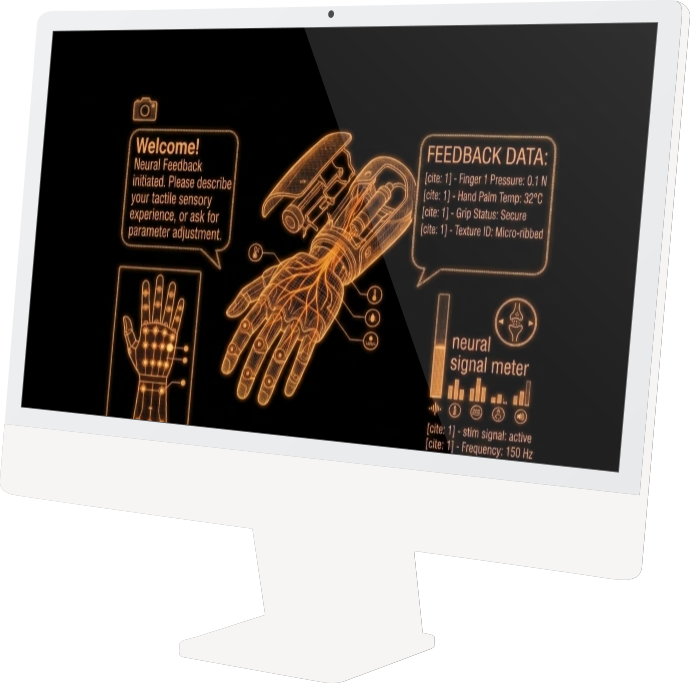
💻 System Specifications & Architecture
| Component | Technical Details |
| Primary Function | High-fidelity somatosensory feedback and neural closed-loop prosthetic control. |
| Core Technology | Flexible Piezoresistive E-Skin, Transcutaneous Electrical Nerve Stimulation (TENS), and Low-Latency Neuromorphic Microcontrollers. |
| Interface Elements | Multi-point contact pressure maps, thermal/moisture tracking nodes, and pulse-frequency monitors ($150\text{ Hz}$ base stimulation). |
| Deployment Target | Advanced myoelectric bionic limbs, neuro-rehabilitation interfaces, and specialized sensory-enabled orthotics. |
Project Overview: Neural-Skin Prosthetic Feedback System
The Neural-Skin Prosthetic Feedback System is a pioneering biomedical engineering project aimed at restoring the sensation of touch to upper-limb amputees. By integrating flexible, sensor-embedded electronic skin (e-skin) with non-invasive neural stimulation interfaces, this system translates real-time physical interactions—such as pressure, temperature, and texture—into bio-compatible electrical signals. This loop allows the user's nervous system to perceive artificial tactile sensations seamlessly, significantly improving motor control, object manipulation, and tool integration.
🎯 Key Features
Closed-Loop Tactile Mapping: Employs a matrix of micro-sensors distributed across the prosthetic hand to detect multi-axial grip force, surface textures, and ambient thermal variances.
Neuromorphic Signal Conversion: An on-board processing unit translates raw sensor telemetry into high-frequency biomimetic pulses, mimicking normal peripheral nerve signaling patterns.
Proactive Sensory Adaptation: Features a real-time signal meter dashboard that dynamically modulates electrical stimulus frequencies based on contact duration to prevent sensory adaptation or nerve fatigue.
📈 Project Impact & Deliverables
Restoration of Natural Somatosensory Experience :
Successfully bridges the gap between hardware and human biology, allowing amputees to "feel" their surroundings again. Users can distinguish between delicate textures, hot/cold surfaces, and micro-ribbed patterns naturally.
